


Efficient operations depend on knowing what is available, where it is located, how quickly it moves, and when it needs to be replenished. For many organizations, inventory is one of the largest working capital investments, yet it is often managed with disconnected spreadsheets, manual counts, or outdated systems. Inventory management software improves operational efficiency by giving teams accurate visibility, stronger control, and faster decision-making across the entire supply chain.
TLDR: Inventory management software helps businesses operate more efficiently by reducing manual work, improving stock accuracy, and preventing costly overstocking or stockouts. It centralizes inventory data, automates routine processes, and supports better forecasting, purchasing, warehouse management, and reporting. For companies that rely on physical products, it provides the structure and visibility needed to reduce waste, improve service levels, and scale with confidence.
Why Inventory Efficiency Matters
Inventory affects nearly every part of a product-based business. Purchasing teams need accurate demand information. Warehouse staff need clear picking and storage instructions. Sales teams need reliable availability data. Finance teams need precise cost and valuation reports. When inventory information is incomplete or delayed, the consequences can be serious: missed sales, emergency purchasing, excess carrying costs, inaccurate financial statements, and dissatisfied customers.
Operational efficiency is not simply about working faster. It is about reducing unnecessary effort, improving reliability, and making better use of resources. Inventory management software creates the foundation for this efficiency by replacing guesswork with structured processes and real-time data.
Centralized Visibility Across the Business
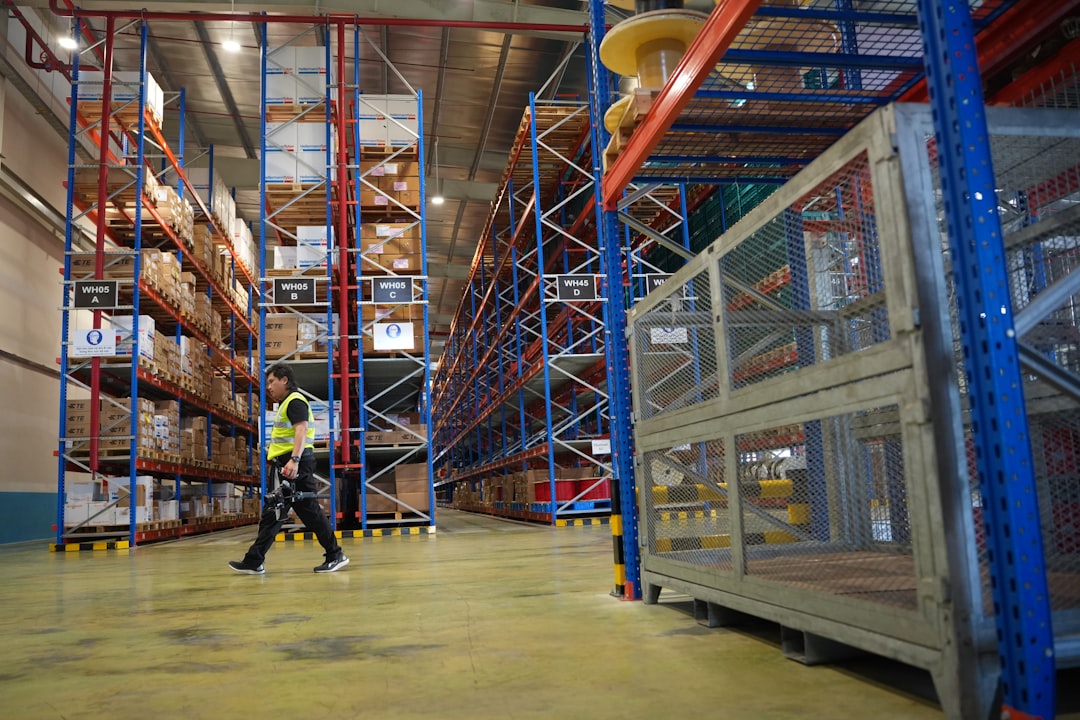
One of the most important benefits of inventory management software is centralized visibility. Instead of relying on separate files, emails, or local records, employees work from a single source of truth. This means that current stock levels, product locations, purchase orders, sales orders, transfers, and adjustments can be viewed in one system.
Centralized visibility improves efficiency in several ways:
- Fewer internal delays: Teams do not need to wait for another department to confirm stock information manually.
- Better coordination: Sales, purchasing, warehouse, and finance teams can work from consistent data.
- Improved accountability: Inventory movements are recorded, making it easier to identify errors or process gaps.
- Faster issue resolution: When discrepancies occur, managers can investigate transaction history instead of searching through scattered records.
For businesses with multiple warehouses, stores, or production sites, this visibility becomes even more valuable. Managers can see where stock is available and transfer products intelligently rather than placing unnecessary purchase orders.
Reduced Manual Work and Human Error
Manual inventory management consumes significant time. Employees may spend hours entering data, updating spreadsheets, reconciling counts, or checking product availability by hand. These tasks are not only time-consuming; they are also vulnerable to mistakes. A single incorrect entry can lead to misleading stock levels, delayed shipments, or incorrect purchasing decisions.
Inventory management software reduces manual work through automation. Common automated functions include:
- Stock level updates after sales, receipts, returns, or transfers.
- Automatic reorder alerts when inventory falls below set thresholds.
- Barcode or QR code scanning for faster receiving, picking, and counting.
- Batch, lot, or serial number tracking for traceability.
- Automated reporting for inventory valuation, aging stock, and movement trends.
By reducing repetitive administrative tasks, companies can use employee time more productively. Warehouse staff can focus on accurate fulfillment. Purchasing staff can focus on supplier performance and cost control. Managers can focus on analysis and improvement rather than chasing updates.
Better Demand Forecasting and Replenishment
Poor forecasting is a common cause of inefficiency. Too little stock leads to stockouts, backorders, production delays, and lost revenue. Too much stock ties up cash, requires more storage space, increases insurance and handling costs, and raises the risk of obsolescence.
Inventory management software supports better forecasting by analyzing historical sales, seasonal patterns, lead times, supplier performance, and current order trends. While no system can predict demand perfectly, software provides more reliable guidance than intuition alone.
Replenishment can also be managed with clear rules. Businesses can set minimum and maximum stock levels, reorder points, economic order quantities, and lead time buffers. When inventory reaches a defined threshold, the system can alert purchasing teams or generate suggested purchase orders.
This structured approach leads to more disciplined purchasing. Instead of reacting to shortages at the last moment, companies can plan replenishment based on data. The result is lower emergency shipping costs, fewer production interruptions, and improved customer service.

Improved Warehouse Productivity
Warehouse operations are a major area where inventory management software improves efficiency. Without a reliable system, workers may waste time searching for items, correcting picking mistakes, or resolving shipping discrepancies. In high-volume environments, even small inefficiencies can become expensive.
Software improves warehouse productivity by guiding employees through standard workflows. For example, it can identify where products should be stored, direct pickers to the right location, prioritize urgent orders, and confirm accuracy through scanning. This reduces unnecessary movement and improves order fulfillment speed.
Important warehouse efficiency features often include:
- Location tracking: Products are assigned to specific bins, shelves, zones, or warehouses.
- Barcode scanning: Items can be received, moved, picked, counted, and shipped with fewer errors.
- Picking optimization: Orders can be grouped or sequenced to reduce travel time.
- Cycle counting: Inventory accuracy can be maintained without shutting down operations for full physical counts.
- Receiving controls: Incoming goods can be matched against purchase orders to reduce mismatches and supplier disputes.
These improvements help warehouses process more orders with the same team, or maintain quality as order volume grows. They also support a more professional and consistent customer experience.
Lower Carrying Costs and Less Waste
Inventory carries hidden costs. Storage, labor, insurance, depreciation, shrinkage, spoilage, and opportunity cost all reduce profitability. When companies lack clear inventory data, they often compensate by holding more stock than necessary. This may feel safer, but it can quietly weaken cash flow and increase operational complexity.
Inventory management software helps reduce carrying costs by identifying slow-moving, obsolete, or excess stock. Managers can review aging reports and movement history to decide whether to discount, transfer, bundle, return, or discontinue certain items. This helps prevent warehouses from becoming crowded with products that no longer contribute meaningfully to revenue.
For businesses dealing with perishable goods, regulated products, or items with expiration dates, software is especially important. It can support first in, first out or first expired, first out processes, reducing waste and improving compliance.
Stronger Supplier and Purchasing Management
Operational efficiency depends not only on internal processes but also on supplier reliability. Inventory management software helps businesses evaluate supplier performance using data such as lead times, delivery accuracy, pricing history, order fill rates, and quality issues.
With this information, purchasing teams can make better decisions. They can identify suppliers that consistently deliver late, compare cost trends, negotiate stronger terms, and reduce dependence on unreliable vendors. Purchase orders can also be standardized, approved, and tracked within the system, reducing confusion and improving financial control.
In many organizations, purchasing inefficiency comes from informal decisions: someone orders too early, too late, too much, or from the wrong supplier. Software introduces discipline by connecting purchasing activity to real inventory requirements and documented approval workflows.
More Accurate Financial Reporting
Inventory is closely tied to financial reporting. Inaccurate inventory records can distort cost of goods sold, gross margin, asset values, and profitability analysis. This can lead to poor management decisions and audit challenges.
Inventory management software improves financial accuracy by recording inventory transactions as they occur. Receipts, shipments, returns, adjustments, transfers, and production usage can all be tracked in detail. When integrated with accounting or enterprise resource planning systems, inventory data can flow directly into financial reports.
This reduces the need for manual reconciliations and improves confidence in the numbers. Finance teams can close periods more efficiently, analyze margins more accurately, and provide leadership with timely insights.
Improved Customer Satisfaction
Customer experience is strongly affected by inventory accuracy. Customers expect products to be available when promised and delivered on time. If a business accepts an order for an item that is not actually in stock, the result may be cancellation, delay, or loss of trust.
Real-time inventory visibility allows sales and customer service teams to provide accurate information. They can confirm availability, suggest alternatives, estimate delivery dates, and avoid making commitments the company cannot meet. For ecommerce businesses, inventory software can synchronize stock levels across online stores, marketplaces, and physical locations, reducing the risk of overselling.
Reliable fulfillment builds credibility. Over time, fewer stockouts and shipping errors can increase repeat purchases and strengthen customer relationships.

Scalability and Process Standardization
As a business grows, informal inventory processes become harder to maintain. A spreadsheet that works for one warehouse and a limited product range may fail when the company adds more locations, channels, suppliers, or product variants. Growth magnifies inefficiency unless processes are standardized.
Inventory management software supports scalability by creating repeatable workflows. New employees can follow defined procedures for receiving, counting, picking, transferring, and adjusting inventory. Managers can monitor performance across locations and maintain consistent controls even as the business expands.
Standardization also reduces dependence on individual knowledge. If only one experienced employee knows where items are stored or how stock is tracked, the business is exposed to operational risk. Software captures information in a system that the organization can manage collectively.
Data-Driven Continuous Improvement
Efficiency is not a one-time achievement. It requires continuous monitoring and improvement. Inventory management software provides the data needed to identify bottlenecks, measure performance, and evaluate operational changes.
Useful metrics may include:
- Inventory turnover: How quickly stock is sold or used.
- Stockout frequency: How often items are unavailable when needed.
- Order accuracy: How often orders are picked, packed, and shipped correctly.
- Carrying cost: The cost of holding inventory over time.
- Supplier lead time: How long suppliers take to deliver after an order is placed.
- Shrinkage: Inventory loss caused by damage, theft, error, or other discrepancies.
When these metrics are reviewed regularly, managers can make targeted improvements. They may redesign warehouse layouts, renegotiate supplier agreements, adjust reorder points, improve training, or discontinue unprofitable products. The software does not replace management judgment, but it provides the evidence needed for better judgment.
Implementation Considerations
To achieve meaningful efficiency gains, businesses should approach implementation carefully. Selecting software is only part of the process. The company must also define clear procedures, clean existing data, train employees, and monitor adoption.
Important implementation steps include:
- Assess current problems: Identify where time, money, or accuracy is being lost.
- Define requirements: Consider warehouse complexity, sales channels, reporting needs, integrations, and compliance requirements.
- Clean product data: Standardize item names, units of measure, SKUs, categories, and supplier information.
- Train users properly: Ensure employees understand both the software and the process behind it.
- Measure results: Track improvements in accuracy, fulfillment speed, stockouts, carrying costs, and labor productivity.
A disciplined implementation helps ensure the software becomes a genuine operational asset rather than another disconnected tool.
Conclusion
Inventory management software improves operational efficiency by connecting people, processes, and data. It reduces manual effort, improves stock accuracy, strengthens purchasing decisions, increases warehouse productivity, lowers carrying costs, and supports better customer service. For businesses that depend on inventory, these improvements can have a direct impact on cash flow, profitability, and long-term resilience.
The most effective systems do more than record stock levels. They help organizations operate with greater control, transparency, and discipline. In a competitive environment where customers expect speed and reliability, modern inventory management software is not merely an administrative convenience; it is a practical foundation for efficient operations.


How to Use Rufus and Ventoy to Install Windows 10 or Windows 11 from an ISO File
Rufus is best for one Windows ISO, while Ventoy is best when a user wants several ISOs on one USB…