


Modern compilers are sophisticated systems that transform human-readable source code into efficient machine code. At the heart of this transformation lies the generation of an Intermediate Representation (IR), a crucial abstraction layer that bridges high-level language constructs and low-level hardware instructions. Understanding how IR is generated is essential for compiler engineers, language designers, and systems programmers who aim to build reliable and performant compilers.
TLDR: Intermediate Representation (IR) is a structured, machine-independent form of code that allows compilers to analyze and optimize programs effectively. Generating IR involves lexical and syntax analysis, semantic checks, construction of intermediate structures, optimization preparation, and translation into a lower-level IR form. These five essential steps form the backbone of modern compiler design. A well-designed IR improves portability, maintainability, and optimization capabilities.
Why Intermediate Representation Matters
An Intermediate Representation provides a common ground between the source language and target architecture. Instead of translating high-level code directly into machine instructions, the compiler first converts it into a structured representation designed for analysis and transformation.
The benefits of IR include:
- Portability: Multiple source languages can map to the same IR.
- Optimization: Code transformations become easier and more systematic.
- Retargetability: A single IR can be translated into machine code for different hardware architectures.
Modern compilers such as LLVM, GCC, and Rust’s compiler rely extensively on powerful IR layers to achieve high performance and flexibility.
Step 1: Lexical and Syntax Analysis
The first step toward generating IR begins with converting raw source code into a structured format that can be processed systematically.
Lexical Analysis
The compiler’s front end starts by performing lexical analysis. It scans the source code and breaks it into tokens, such as:
- Keywords
- Identifiers
- Literals
- Operators
This tokenizer ensures that the code is divided into meaningful atomic units. While this stage does not yet create IR, it lays the groundwork for structured translation.
Syntax Analysis
Next, syntax analysis (parsing) organizes tokens into a hierarchical structure, typically an Abstract Syntax Tree (AST). The AST represents the grammatical structure of the program while omitting unnecessary syntactic elements.

The AST is critical for IR generation because it captures:
- Expression precedence
- Control flow constructs
- Function definitions and calls
- Variable declarations
Without a well-formed AST, reliable IR generation is impossible. The AST serves as the structured blueprint from which intermediate instructions will be derived.
Step 2: Semantic Analysis and Type Checking
Before IR generation can proceed safely, the compiler must validate the meaning of the program. This stage ensures correctness beyond syntactic validity.
Semantic analysis typically includes:
- Type checking: Verifying that operations are performed on compatible types.
- Scope resolution: Ensuring identifiers are declared before use.
- Symbol table construction: Managing variable and function bindings.
The symbol table becomes a central structure during IR generation. It contains information such as variable types, memory locations, and visibility levels.
At this stage, the compiler may annotate the AST with type information and additional metadata. This enriched AST is now ready for translation into an intermediate form. Proper semantic validation reduces ambiguity and ensures that generated IR accurately reflects program behavior.
Step 3: Constructing the Core Intermediate Representation
This step marks the actual beginning of IR generation. The compiler traverses the annotated AST and converts each high-level construct into a lower-level, structured representation.
Common IR Forms
Modern compilers typically generate one of the following forms:
- Three-Address Code (TAC)
- Static Single Assignment (SSA)
- Control Flow Graph (CFG)
- Bytecode-style linear instructions
Three-Address Code, for example, transforms complex expressions into simpler instructions containing at most three operands:
a = b + c * d becomes:
- t1 = c * d
- t2 = b + t1
- a = t2
This decomposition simplifies optimization and ensures clarity in dependency tracking.
Lowering High-Level Constructs
Control structures such as loops and conditionals are translated into explicit jumps and labels. For example:
- If statements become conditional branches.
- Loops are transformed into basic blocks with back edges.
- Function calls are converted into parameter passing and return sequences.
This transformation process is often called lowering, as it converts high-level abstractions into a more primitive form while preserving program semantics.
Step 4: Building the Control Flow Graph and Applying SSA
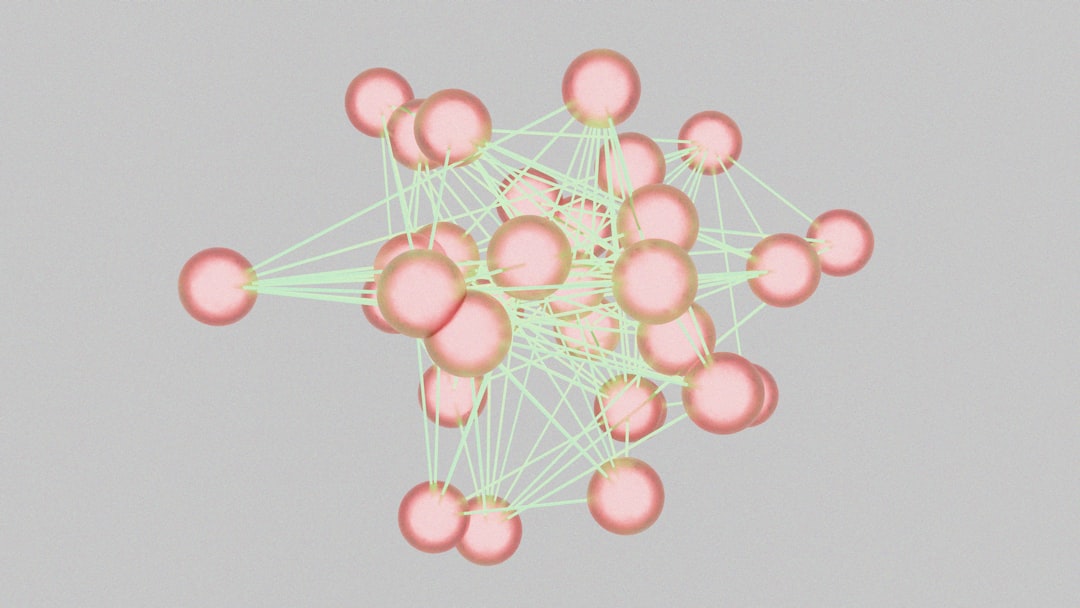
To prepare the IR for advanced optimization, modern compilers structure it into a Control Flow Graph (CFG). A CFG represents program flow in terms of basic blocks—linear sequences of instructions without internal jumps.
Each node in the CFG represents a basic block, and edges represent possible control transfers.
Static Single Assignment (SSA)
Many modern compilers transform the IR into SSA form. In SSA:
- Each variable is assigned exactly once.
- New variable versions are created for each assignment.
- Phi functions merge values at control-flow join points.
For example:
- x1 = 5
- x2 = x1 + 1
- x3 = phi(x1, x2)
SSA simplifies dependency tracking and enables powerful optimizations such as constant propagation, dead code elimination, and value numbering. Without CFG and SSA construction, optimization would be far more complex and error-prone.
Step 5: Preparing IR for Optimization and Backend Translation
After generating and structuring the IR, the compiler prepares it for optimization and eventual code generation.
IR Normalization
Normalization ensures consistency and canonical formatting of instructions. This includes:
- Breaking complex instructions into simpler primitives.
- Standardizing operand ordering.
- Removing redundancy where possible.
Analysis Framework Integration
The IR is augmented with analysis data such as:
- Data flow information
- Dominance relationships
- Liveness analysis results
These analyses guide optimization passes and backend instruction selection. The IR must be clean, consistent, and structurally sound to support reliable transformation.
Finally, the optimized IR is handed over to the backend, where it is translated into target-specific machine code, often through a lower-level IR stage.
Key Design Principles in Modern IR Generation
Across all five steps, several principles guide robust IR design:
- Preserve semantics: Every transformation must maintain program correctness.
- Enable optimization: The structure should make improvements obvious and safe.
- Maintain simplicity: Excessive complexity reduces maintainability.
- Support modularity: IR should allow independent transformation passes.
Successful compiler infrastructures such as LLVM demonstrate how layered IR design can accommodate multiple languages, optimization levels, and architectures without redesigning the entire compilation pipeline.
Conclusion
Generating Intermediate Representation is not a single isolated task but a structured process embedded within the compiler’s front and middle ends. It begins with lexical and syntax analysis, progresses through semantic validation, constructs a structured IR, organizes it via control flow and SSA, and prepares it for optimization and machine code generation.
Each of the five essential steps plays a vital role in ensuring that the IR is accurate, analyzable, and adaptable. Modern compiler design depends heavily on this intermediate abstraction to achieve portability, efficiency, and scalability. For anyone building or studying compilers, mastery of IR generation is foundational. It is the mechanism that transforms abstract programming language constructs into a form that machines can ultimately execute with precision and performance.



6 Solutions Teams Evaluate Instead of Evidence.dev for Dashboard Development
Modern teams building data products increasingly want dashboards that are flexible, developer-friendly, and easy to embed. While Evidence.dev has gained…