

Time-series data powers everything from financial trading platforms and IoT sensor networks to monitoring dashboards and machine learning systems. For years, Timescale has been a popular choice for developers building on PostgreSQL who need time-series capabilities. However, as workloads evolve, costs increase, or architectural needs shift, many teams begin evaluating alternatives. Whether it’s scalability concerns, licensing changes, performance tuning challenges, or cloud-native priorities, replacing a time-series database is a decision that requires careful consideration.
TLDR: Developers replacing Timescale often evaluate five leading alternatives: InfluxDB, ClickHouse, Apache Druid, QuestDB, and Amazon Timestream. Each offers unique advantages in scalability, query speed, storage efficiency, and cloud integration. The right choice depends on workload characteristics, operational complexity, and team expertise. Understanding their core strengths makes migration planning significantly smoother.
Below, we break down five leading solutions developers commonly evaluate when migrating from Timescale, along with a comparison chart to help clarify their strengths.
1. InfluxDB
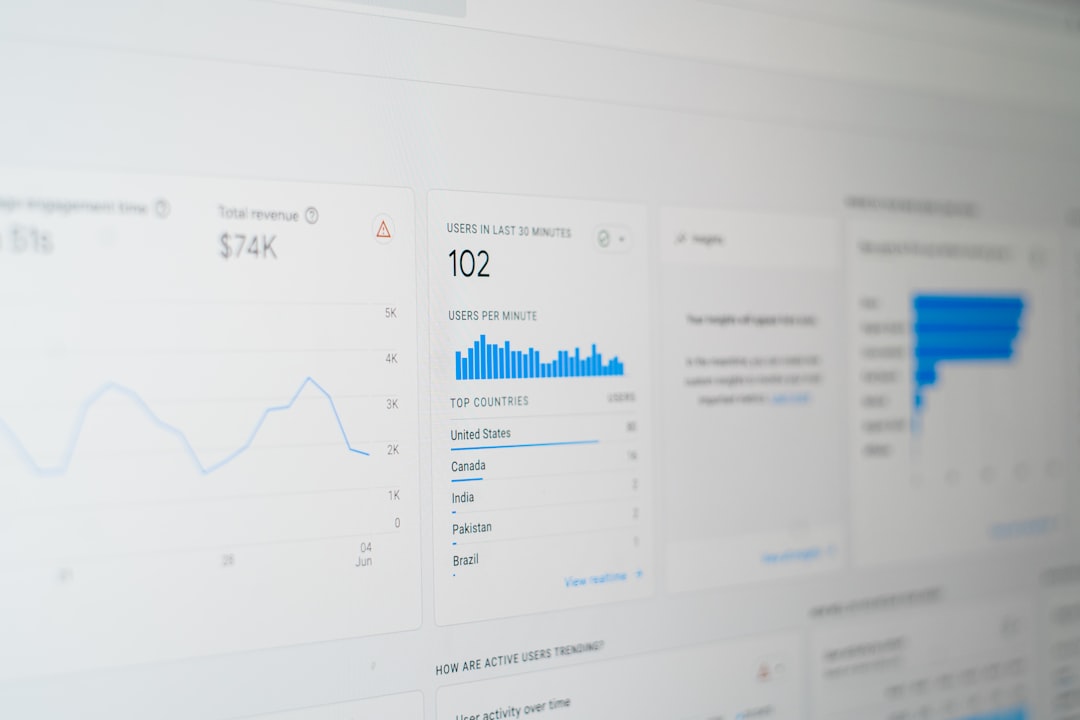
InfluxDB is often the first alternative developers consider. Purpose-built for time-series workloads, it offers a specialized storage engine and a custom query language (Flux and InfluxQL) optimized for metrics and event tracking.
Why developers evaluate it:
- High write throughput for metrics-heavy workloads.
- Built-in retention policies and downsampling features.
- Optimized for DevOps, IoT, and monitoring use cases.
- Native integrations with popular visualization tools.
InfluxDB shines in environments generating massive streams of time-stamped data—like server metrics or IoT sensor readings. Its architecture emphasizes efficient ingestion and fast queries over recent data.
Tradeoffs to consider:
- Learning a new query language if moving from SQL.
- Cluster management complexity in self-hosted setups.
- Cost considerations in fully managed cloud plans.
For teams heavily focused on observability or telemetry pipelines, InfluxDB remains a strong candidate.
2. ClickHouse
ClickHouse is a column-oriented database management system designed for high-performance analytics. While not originally built strictly for time-series data, it handles time-based analytics exceptionally well.
Why developers evaluate it:
- Extremely fast OLAP-style analytical queries.
- Horizontal scalability for petabyte-scale datasets.
- Efficient columnar storage and compression.
- Full SQL support, easing migration from PostgreSQL-based setups.
ClickHouse excels when time-series data must be analyzed across massive dimensions—such as user behavior events, financial trades, clickstream analytics, or application logs.
Real-world appeal: Teams replacing Timescale often cite performance at scale as a deciding factor. ClickHouse’s distributed architecture allows for partitioning by time and other keys, delivering impressive query speeds even across enormous datasets.
Tradeoffs:
- Not purpose-built solely for time-series semantics.
- Requires careful tuning of partitions and merges.
- Operational overhead for cluster management.
If your time-series workloads are shifting toward heavy analytical processing, ClickHouse may offer a substantial performance upgrade.
3. Apache Druid
Apache Druid is a real-time analytics database designed for fast slice-and-dice queries on event-driven data streams.
Why it’s considered:
- Real-time ingestion with immediate query availability.
- Sub-second query response for interactive dashboards.
- Strong indexing capabilities.
- Designed for high concurrency workloads.
Druid is particularly attractive for organizations building customer-facing analytics dashboards or products requiring interactive exploration of streaming data.
Strength in replacing Timescale:
When workloads emphasize real-time decision-making and high-concurrency user queries, Druid’s architecture—separating ingestion, storage, and query nodes—delivers scalability that can outperform traditional relational extensions.
Challenges:
- Operational complexity compared to simpler deployments.
- More components to manage.
- Not a direct relational drop-in replacement.
For analytics-heavy applications rather than purely metric storage, Druid is a compelling solution.
4. QuestDB
QuestDB is an emerging high-performance open-source time-series database designed specifically for financial services, trading systems, and IoT applications.
Reasons developers evaluate QuestDB:
- High ingestion rates exceeding millions of rows per second.
- SQL-based querying with time-series extensions.
- Optimized for time-partitioned data storage.
- Lightweight deployment footprint.
QuestDB’s strong focus on performance and simplicity makes it appealing to teams looking for a streamlined alternative without excessive operational overhead.
Key benefit: It balances SQL familiarity with specialized time-series optimizations, offering an easier transition from PostgreSQL-based systems like Timescale.
Limitations:
- Smaller ecosystem compared to more established platforms.
- Fewer enterprise-ready management tools.
- Rapid development means evolving feature maturity.
For performance-driven workloads where developer simplicity is a priority, QuestDB often makes the shortlist.
5. Amazon Timestream
Amazon Timestream is a fully managed time-series database service offered on AWS.
Why teams consider it:
- Serverless architecture with automatic scaling.
- Built-in storage tiering between memory and magnetic layers.
- Deep integration with AWS services.
- No infrastructure management overhead.
Timestream is especially attractive for organizations already deeply invested in AWS. Its pay-as-you-go model and automatic scaling eliminate many operational burdens.
Advantages over self-hosted Timescale:
- No cluster maintenance.
- Automatic patching and availability handling.
- Simplified cost forecasting for moderate workloads.
Drawbacks:
- Vendor lock-in concerns.
- Limited control compared to open-source deployments.
- Costs can escalate at very high ingestion volumes.
If reducing operational overhead is more critical than deep infrastructure control, Amazon Timestream is a strong managed option.
Comparison Chart
| Solution | Best For | Query Language | Scalability | Operational Complexity | Cloud Native |
|---|---|---|---|---|---|
| InfluxDB | Monitoring, IoT metrics | Flux / InfluxQL | High (clustered) | Medium | Yes |
| ClickHouse | Large-scale analytics | SQL | Very High | High | Yes |
| Apache Druid | Real-time dashboards | SQL-like | Very High | High | Yes |
| QuestDB | High-performance time-series | SQL | High | Low to Medium | Emerging |
| Amazon Timestream | AWS-managed deployments | SQL-like | Auto-scaling | Low | Fully Managed |
Key Factors to Consider When Replacing Timescale
Choosing a replacement isn’t just about features—it’s about alignment with your architecture and business goals. Developers typically evaluate:
- Write throughput requirements – Events per second, ingestion burst patterns.
- Query complexity – Simple aggregations vs. multi-dimensional analytics.
- Data retention policies – Automated downsampling and cold storage tiering.
- Deployment model – Self-hosted, hybrid, or fully managed.
- Cost predictability – Licensing, infrastructure, and scaling expenses.
- Ecosystem integrations – BI tools, visualization platforms, streaming pipelines.
Even subtle differences—such as compression algorithms or partitioning strategies—can significantly affect performance and operational efficiency.
Final Thoughts
Replacing Timescale is rarely about dissatisfaction alone—it’s often about evolution. As applications scale, workloads shift from simple metric aggregation to real-time analytics, and infrastructure strategies migrate to cloud-native environments, new database architectures may better support long-term growth.
InfluxDB offers purpose-built simplicity for metrics. ClickHouse delivers exceptional analytical horsepower. Apache Druid excels at real-time interactive analytics. QuestDB balances performance and ease of use. Amazon Timestream eliminates infrastructure overhead for AWS-focused teams.
Each solution reflects a different philosophy of handling time-series data. The best choice depends not solely on database benchmarks, but on the broader system architecture, team expertise, and business priorities driving the migration.
In the end, replacing a time-series database isn’t just a technical switch—it’s a strategic investment in scalability, efficiency, and future-proof performance.


What Is Dolby Vision: A Complete Guide to Dolby Vision HDR, Dynamic Metadata, Supported Devices, and Video Quality
Dolby Vision is one of the most advanced HDR formats for home video because it can adjust brightness, contrast, and…